Space Gas Station?
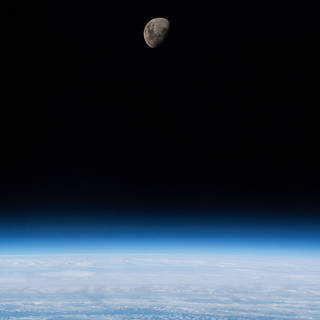
If I were to tell you that in a few years you could be going to the moon or possibly Mars on a commercial spacecraft, would you believe me?
For some people that dream can soon become a reality in a couple years. NASA plans to take to the moon and then venture deeper into space, and eventually to Mars. “As NASA sets its sights on returning to the Moon, and preparing for Mars, the agency is developing new opportunities in lunar orbit to provide the foundation for human exploration deeper into the solar system.”
Now, according to NASA they are a little behind schedule with their original plan with SLS and EM-1 but their alternatives aren’t bad either. They possibly plan to use two heavy commercial rockets to get the Orion capsule and European service module into space and eventually around the moon.
This will open up a new opportunity for achieving missions deeper into space. NASA plans to build the gateway in the 2020’s and assemble the components through out that time to where eventually we are building rockets in space and humans are able to live and work in deep space for 30 to 60 days at a time.
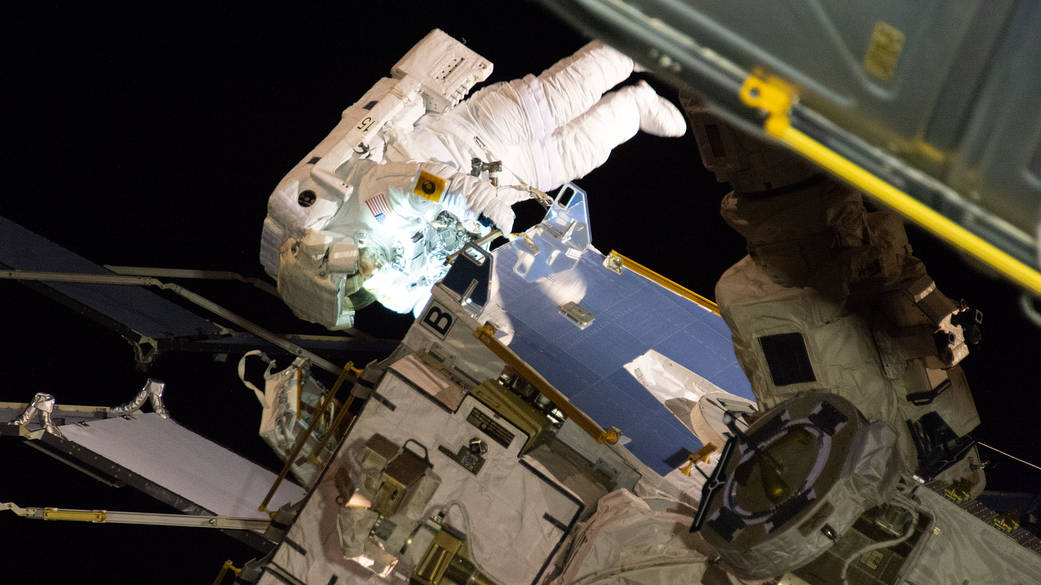
“The power and propulsion element will be the initial component, and is targeted to launch in 2022. Using advanced high-power solar electric propulsion, the element will maintain the Gateway’s position and can move the Gateway between lunar orbits over its lifetime to maximize science and exploration operations. As part of the agency’s public-private partnership work under Next Space Technologies for Exploration Partnerships, or NextSTEP, five companies are completing four-month studies on affordable ways to develop the power and propulsion element. NASA will leverage capabilities and plans of commercial satellite companies to build the next generation of all electric spacecraft.”
Sounds wild right? That’s not even all of it. Remember the 30 to 60 days at a time in deep space thing I was telling you about? Well two years after the targeted launch of the initial component in 2022; they plan to add habitation capabilities which will only further increase our advancement of building that space gas station and getting to Mars!
That kind of seems like a long time though. Having to travel across space for a long period of time without being able to get out to stretch or get snacks. So what’s the solution? What about a shortened travel time. With NASA working on using solar powered spacecrafts, they also plan on trying to reduce time, and cost savings, and increase propulsion power.
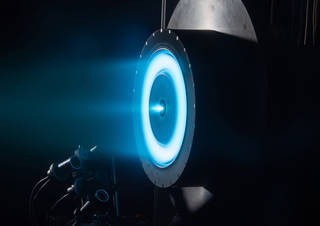
“Energized by the electric power from on-board solar arrays, the electrically propelled system will use 10 times less propellant than a comparable, conventional chemical propulsion system, such as those used to propel the space shuttles to orbit.” Therefore even with the reduced fuel and the weight of it; the spacecraft are still able to get beyond low-Earth orbit. “Energy is fed into exceptionally fuel-efficient thrusters to provide gentle but nonstop thrust throughout the mission.”
Looking over some of the information provided, building a gas station on the moon to refuel rockets isn’t the solution, but solar power might be just that. A solution to solve a problem where we need to reduce cost savings, and time, and be able to power more than one spacecraft eventually without mining Earth of all its oil. Not too shabby if you ask me!
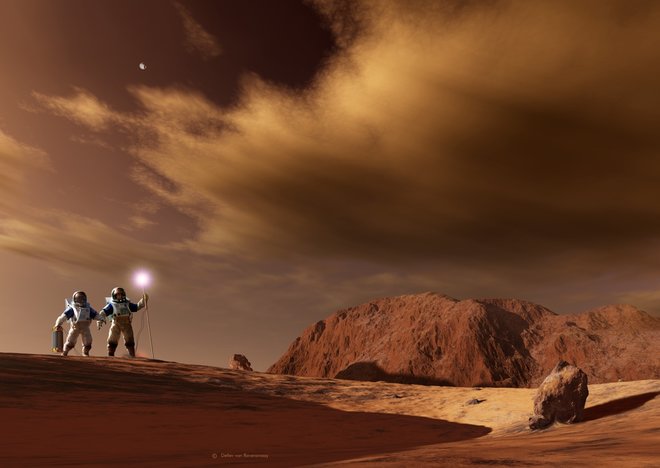
NASA’s plans for the future of human space exploration are too detailed to put everything in, and probably a little dry for some people but nonetheless wild and exciting! It sounds like there are big plans in play and all we have to do is wait and bite our time; then soon enough, we’ll be on the Moon; thinking about Mars next!
 Space Blog